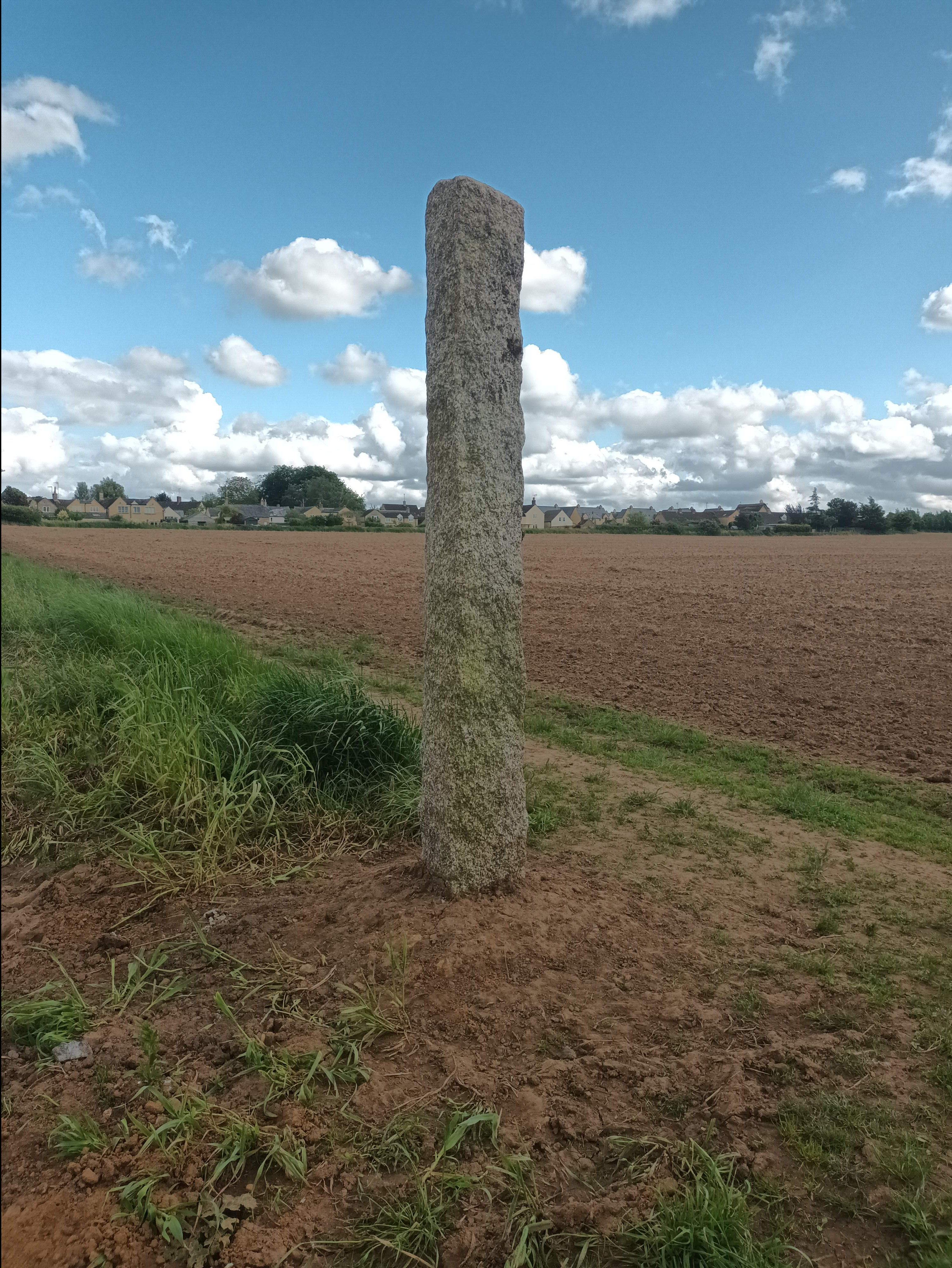

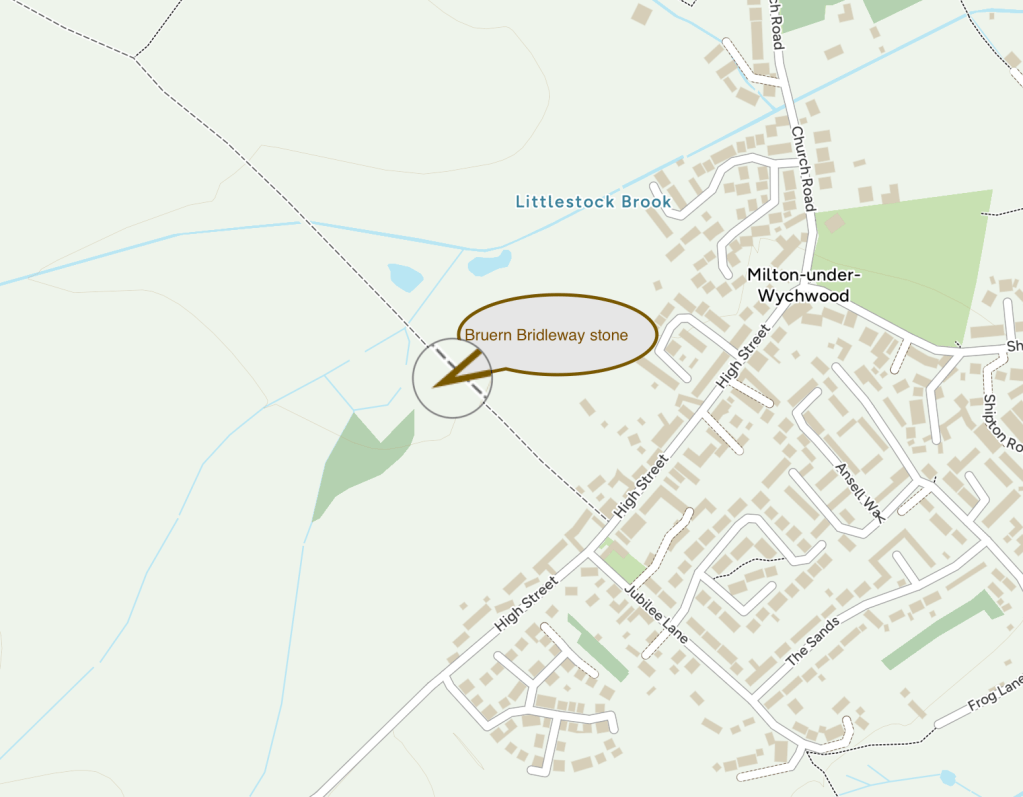
Heritage Summary
The bridleway passing this stone is a public right of way that links Bruern Grange Farm to Milton village, emerging on the High Street opposite to the Baptist Chapel.
This was once an area of open farmland on the western side of the High Street. that formed part of the open field system encircling Milton prior to Enclosure in 1849.
Bruern was the location of an important medieval Cistercian Abbey, which was sited about a mile north of this stone. Bruern Abbey played an important role in the economy and administration of the area, being a major landowner. However, the Abbey was dismantled following the dissolution of the monasteries in the mid-16thCentury see Bruern Abbey >
Continuing along this bridleway you will come to Bruern Grange, the main house of a farm of the same name, though it is now known simply as Bruern Farm.
This is a longstanding and important local farm, the current house dating back to at least the 17th Century. The farm is said to have become neglected in the later 19th Century, but enjoyed a revival in its fortunes when it became the home of a fleet of steam traction engines from the 1920s to the 1950s; Bruern Abbey >
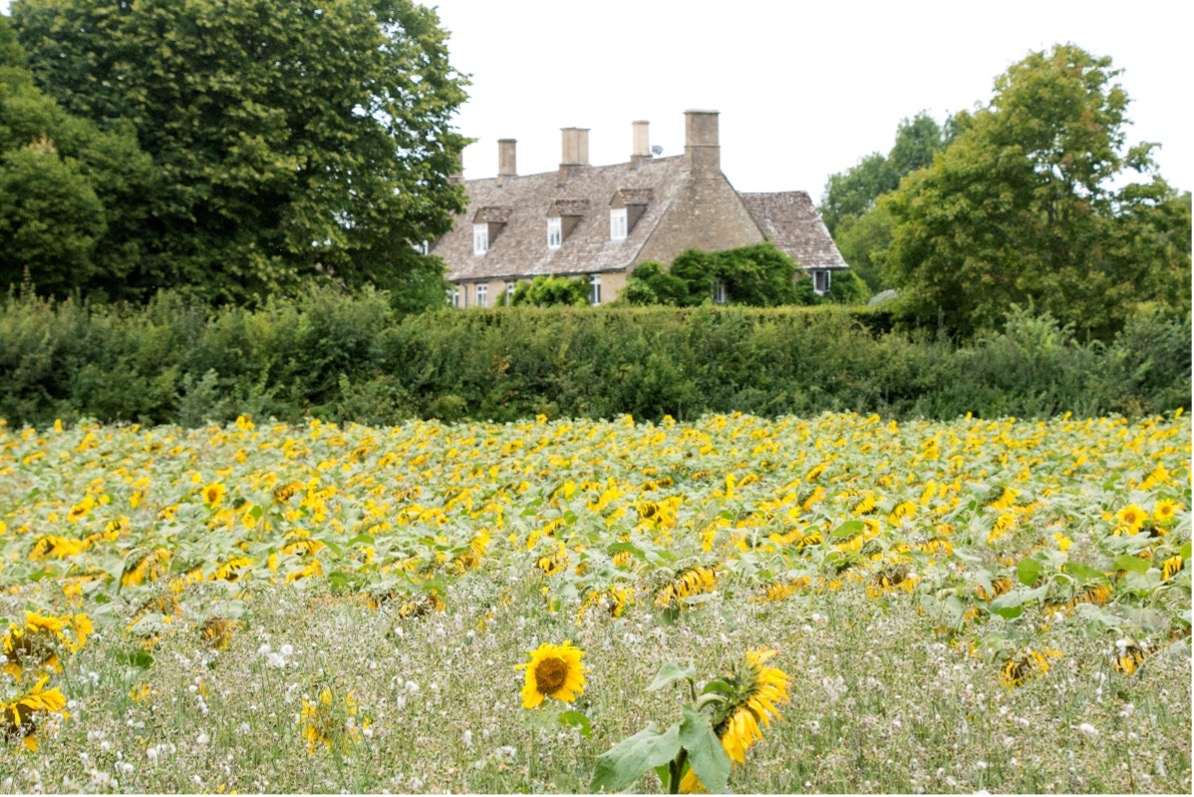
Recent photograph of Bruern Grange and sunflowers
Subsequently, Bruern Grange and Grange Farm were acquired by the Astor family, the enterprise now being known as Bruern Farms. This stone stands on Astor farmland.
Bruern Abbey
Bruern Abbey was a Cistercian Abbey that once stood near the banks of the River Evenlode about a mile north of this stone.
Founded in 1147, the Abbey survived with some ups and downs until its dissolution in the mid-16th Century. It had many landholdings in the area, as well as in Berkshire, Gloucestershire, Wiltshire and Somerset, and played a very important role in the local economy.
Lay brethren supported the Abbey’s clergy by managing its landholdings and other temporal interests.
In the 14th and 15th Centuries they were important sheep farmers, part of the world-famous Cotswold wool industry. Bruern Abbey wool had an excellent reputation and was traded into Flanders and Italy.
The remains of some medieval fishponds belonging to the Abbey have been identified in the area, including one half a mile to the northwest of this stone. The site of this pond was identified and documented by the archaeologist James Bond, with the assistance of members of the Wychwoods Local History Society in October 1989. A report on their work is to be found in the Society’s Journal No. 6 >
More about Bruern Abbey:
- “Bruern Abbey 1147-1536″ (Joy Timms), and “Bruern Abbey and the Valor Ecclesiasticus 1535-6 (J H Drake). Wychwoods History journal >
- Early Bruern: An audio recording by Joy Timms >
Quotes
Milkmaid
By Laurie Lee, a 20th century writer who was born and lived in the Cotswolds.
The quote from the third verse of Lee’s poem references grazing cattle, a familiar sight on the fields of nearby Bruern Farm.
“…. Led to the limestone shadows of a barn
they snuff their past embalmed in the hay,
while her cool hand, cupped to the udder’s fount,
distils the brimming harvest of their day….”
 Milton-under-Wychwood